
Did you know that nearly 80% of adults will experience hip discomfort at some point in their lives, often because of subtle alignment issues that go unnoticed until they worsen?
Hip misalignment can affect how you walk, sleep, and even your posture, yet many people overlook the early signals.
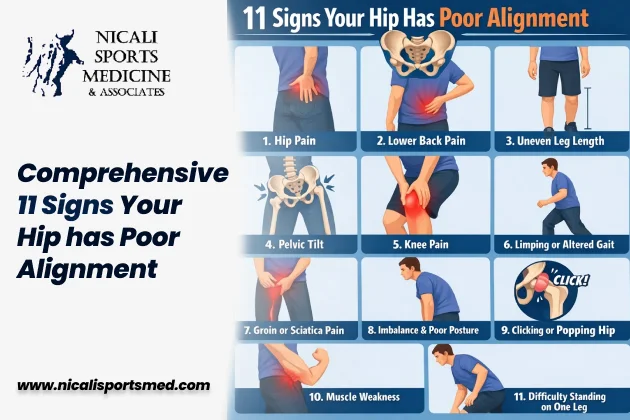
In this detailed guide, we’ll explore 11 unmistakable signs your hip has poor alignment, help you understand why they matter, and offer insights into what you can do to regain balance and comfort.
1. Persistent Lower Back Pain
Lower back pain is one of the first clues that your hip isn’t tracking correctly. When hips are out of alignment, the surrounding muscles, including those in the lower back, compensate. This compensation creates uneven tension patterns that can lead to consistent soreness. According to musculoskeletal studies, improper hip alignment is a key contributor to chronic lumbar strain.
Why it matters: Chronic pain significantly impacts your quality of life and can limit daily activities if left untreated.
2. Uneven Hip Height
Stand in front of a mirror and observe your hip line. If one side appears visibly higher than the other, this points to a structural imbalance. An advanced evaluation from a qualified clinician can confirm whether this imbalance is the result of alignment issues rather than a leg-length discrepancy or pelvic tilt.
Pro tip: Subtle asymmetry may be more apparent in photographs than when looking directly into a mirror.
3. Difficulty Standing for Long Periods
When hips aren’t aligned, weight distribution becomes inefficient. You might find yourself shifting from one leg to the other or leaning to one side to ease discomfort. This isn’t laziness—this is your body trying to adapt.
The impact: Everyday tasks, such as standing in line or cooking dinner, can become uncomfortable over time.
4. Walking With a Limp or Uneven Stride
Hip alignment impacts how your feet contact the ground. If one hip is misaligned, it may shorten your stride on the affected side, creating a limp or noticeable gait abnormality.
Fun fact: Gait analysis is used in sports medicine to detect even tiny imbalances that could lead to injury.
5. Reduced Range of Motion
Can’t lift your leg as high as you used to? Are certain movements—like reaching behind your back difficult? Poor alignment often restricts hip mobility, especially in rotational and extension movements.
Why you should care: Limited range of motion can affect everything from exercising to tying your shoes.
6. Hip Joint Soreness After Activity
Most people expect soreness after intense activity, but if your hip ache starts after mild movements like walking up a flight of stairs, that’s a red flag. Misaligned hips create friction and uneven pressure on the joint surfaces, leading to discomfort that lingers longer than it should.
A note: Discomfort that persists beyond 48 hours may indicate a deeper structural issue.
7. Muscle Imbalances Around the Pelvis
Have you noticed that one side of your hip feels stronger or tighter than the other? Muscle imbalances are a clear sign of alignment issues. Tight hip flexors on one side combined with weaker glute muscles, can pull the pelvis out of its optimal position.
Health tip: Regular strength training and stretching can support balanced muscle function, but severe imbalances may need professional assessment.
8. Recurring Knee or Ankle Pain
Misaligned hips don’t just affect the hip joint itself. They alter how your legs absorb impact and move through space. This can create stress downstream in the knees and ankles, contributing to recurring pain in places that seem unrelated to the hip.
Remember: The body functions as a kinetic chain; misalignment in one area can trigger discomfort elsewhere.
9. Sciatic Nerve Irritation
The sciatic nerve runs from the lower back down each leg. Poor hip alignment can irritate nearby muscles like the piriformis, which may press on the nerve and cause sharp, radiating pain, numbness, or tingling sensations in the buttocks and legs.
Important distinction: Sciatica isn’t a diagnosis on its own—it’s a symptom of an underlying mechanical issue like misalignment.
10. Hip Clicking or Popping Sounds
Audible clicking, popping, or catching sensations when moving your hip may suggest that the joint surfaces aren’t sliding smoothly. While not always painful, these noises can reflect abnormal movement patterns caused by improper alignment.
Quick check: Note whether these sounds are accompanied by discomfort or motion restrictions.
11. Persistent Fatigue in Hips After Simple Tasks
Do your hips feel unusually fatigued after light activity? When alignment is compromised, muscles must work harder to stabilize the joint. Over time, this effort leads to a feeling of exhaustion even after tasks that used to feel effortless.
Insight: This is your body signaling inefficiency in how force is distributed through the hip muscles.
What Causes Hip Misalignment?
Hip misalignment rarely happens overnight. Common contributing factors include:
- Repetitive movement patterns (e.g., favoring one leg)
- Muscle weakness or imbalance
- Previous injuries like sprains or strains
- Prolonged sitting, which tightens the hip flexors
- Structural differences, such as a true leg length discrepancy
These factors gradually alter how the hips sit in the pelvis, affecting posture and movement.
Medical fact: The hip joint is a ball-and-socket joint designed for stability and mobility. When the joint isn’t aligned, surrounding tissues compensate, leading to pain and dysfunction.
Why Early Detection Matters?
Ignoring early signs of hip misalignment can lead to secondary issues such as chronic back pain, osteoarthritis, or compensatory patterns in the spine and knees. In many countries, musculoskeletal pain is a leading cause of disability, often due to untreated alignment problems.
Recognizing symptoms early enables targeted corrective actions that restore balance and prevent further degeneration.
Self-Screening Tips You Can Try at Home
Here are a few simple methods to check for alignment concerns:
1. Mirror Hip Line Check
Stand barefoot in front of a full-length mirror. Do your hips appear level? Differences can indicate pelvic tilt.
2. Leg Length Check
Lie flat on your back and have a friend compare the height of your knees from the ground.
3. Gait Check
Walk across a room while someone observes your stride symmetry.
These aren’t definitive diagnostics, but they can alert you to the need for professional evaluation.
Professional Care: What to Expect
If your symptoms persist, seeking help from a specialist in movement and alignment is wise. A knowledgeable clinician will assess your posture, joint mobility, muscle strength, and gait mechanics. They may use tools like motion analysis or palpation to identify misalignment patterns.
Evidence supports that personalized manual therapies, corrective exercises, and activity modification significantly improve alignment and reduce pain.
How Proper Alignment Enhances Life Quality
Restoring hip balance isn’t just about reducing pain. Aligned hips:
- Improve posture
- Enhance athletic performance
- Reduce injury risk
- Support everyday comfort
- Promote spinal health
When hips move the way they were designed to, the body functions more efficiently as a whole.
Final Thoughts
Your hips are central to how your body moves, balances, and supports your frame. When one or both hips drift out of their optimal position, the effects ripple through your entire system. From subtle shifts in gait to persistent pain, the signs outlined above are invitations to take your body seriously.
By listening to these signals early and seeking informed care, you allow yourself to correct imbalances before they become chronic limitations. Whether you’re an athlete or someone who simply wants to feel better day-to-day, understanding hip alignment empowers you to move with confidence and ease. If you’re exploring solutions beyond basic self-care, targeted chiropractic adjustments in Pasadena CA, can be part of a comprehensive plan to restore hip mechanics and alleviate recurring discomfort.