
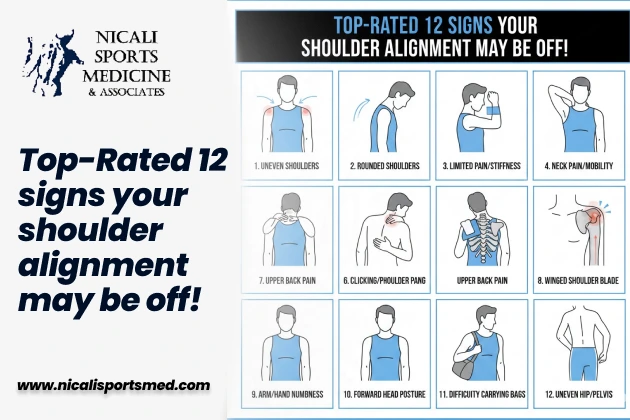
Did you know? Poor shoulder alignment doesn’t just cause discomfort; it can change the way you move every day, impact your posture, and even influence how your nervous system functions. Your shoulders are a complex assembly of muscles, bones, joints, and ligaments. When those parts fall out of balance, subtle signs often appear long before severe pain sets in. Understanding these early indicators can help you take action sooner and avoid long-term problems.
Here’s a clear and friendly guide to the top 12 signs your shoulder alignment may be off, what each feels like, why it happens, and when to consider professional support.
1. One Shoulder Sits Higher Than the Other
A tell-tale sign of misalignment is when one shoulder visibly sits above the other when standing relaxed. It’s more than cosmetic – it often reflects imbalances in muscle tension or skeletal structure that affect your posture and spinal mechanics.
2. Persistent Shoulder Pain That Won’t Go Away
If discomfort lingers for days or weeks without a clear cause, your shoulder may be compensating for misalignment. Acute injuries are one thing, but nagging pain that resists rest and normal self-care suggests deeper alignment issues.
3. Weakness When Lifting or Reaching
Struggling with movements you used to do easily, like lifting a bag overhead or reaching behind your back, can be linked to alignment problems. Muscle imbalance or joint misplacement affects strength and coordination.
4. Shoulder Feels “Loose” or Unstable
You know the feeling: the joint feels like it wants to give way or shift unexpectedly, especially during sudden movement. This sensation is common with instability, where muscles fail to guide the joint smoothly.
5. Clicking, Popping, or Grinding Sounds
Unusual sounds during shoulder movement often point to uneven surfaces rubbing together. This can be due to a misaligned humeral head (upper arm bone) or uneven spacing in the joint. Although sometimes harmless, frequent or painful grinding deserves attention.
6. Reduced Range of Motion
If lifting your arm or rotating it feels limited compared to before, misalignment may be restricting movement. Healthy shoulders should allow smooth motion across multiple directions.
7. Rounded or Slumped Posture
Chronic poor posture, especially forward slouching, pulls your shoulders out of their neutral position. Over time, this not only misaligns your shoulder girdle but also contributes to spine and neck stress.
8. Pain Radiates to Neck or Upper Back
Shoulder alignment problems rarely stay isolated. It’s common for tension or discomfort to travel up into the neck or across the upper back, especially when muscles compensate for an imbalance.
9. Discomfort While Sleeping
Waking up with shoulder pain after resting on one side, or finding it hard to get comfortable, may be a symptom of a structural imbalance. Sleep positions that constantly crunch or stretch joints can reveal alignment issues.
10. Frequent Muscle Tightness or Spasms
If one side of your shoulder or upper back frequently tightens and you can’t seem to loosen it with stretching, this may signal asymmetry in muscle strength or length. Tightness on one side, especially, is a classic alignment red flag.
11. Headaches Linked to Shoulder Tension
Tight shoulder muscles can pull on surrounding structures in the neck, triggering headache symptoms. When tension in the shoulder girdle radiates upward rather than outward, your body is signaling that posture and alignment need attention.
12. Sudden “Clunk” Sensations with Movement
A “clunk” or sensation that something shifts inside the joint as you move could mean the shoulder is not tracking correctly. While not always painful, this shift indicates that alignment isn’t as smooth as it should be and may worsen without corrective care.
Why These Signs Matter?
Shoulder alignment doesn’t just affect one joint; it plays a role in whole-body mechanics. Misalignment can contribute to:
- Uneven muscle development
- Compensatory patterns that strain the lower back or neck
- Increased risk of rotator cuff issues
- Reduced athletic performance or daily comfort
Over time, neglected alignment problems may lead to chronic pain or diminished quality of life.
What Causes Shoulder Misalignment?
Shoulder alignment issues often stem from a mix of physical and lifestyle factors:
1. Muscle imbalance
Dominant muscles overpower weaker ones, creating an uneven pull.
2. Poor posture
Slouching or a forward head position tilts the shoulders forward.
3. Previous injuries
Even healed injuries can leave soft tissues tight and joints slightly shifted.
4. Repetitive overhead activity
Sports or work that involves repetitive motion patterns can contribute to imbalance.
These factors gradually affect how your shoulder sits relative to your spine, sometimes long before you feel pain.
How to Address Shoulder Alignment Imbalances?
1. Professional Assessment
A trained health professional, like a physical therapist, orthopedic specialist, or chiropractor, can evaluate your shoulder mechanics and posture.
2. Corrective Exercises
Targeted strength and flexibility work helps balance muscles and improve alignment. These often include shoulder blade stabilization, rotator cuff strengthening, and stretching tight tissues.
3. Posture Training
Simple changes like workstation setup, ergonomic seating, and awareness throughout the day can make a huge difference.
4. Manual Therapies
Hands-on techniques from qualified practitioners can gently guide joints and soft tissues toward better alignment.
When to Seek Immediate Help?
While subtle misalignment signs can be addressed over time, seek urgent care if you experience:
- Severe shoulder pain that stops movement
- Sudden loss of function after trauma
- Numbness or tingling in your arm
- Shoulder visibly out of place or deformed
These symptoms could point to acute injury or serious joint disruption.
Final Thoughts
Your shoulders are foundational to everyday movements, from lifting coffee to reaching overhead. Recognizing the top 12 signs of misalignment early gives you a chance to act before small issues become major hurdles. Whether it’s a subtle tilt, regular popping, or gradual weakness, listening to your body matters.
And for those living in the Golden State, remember that chiropractic adjustments help in California offer a regulated, professional path to support shoulder alignment and whole-body balance under state law. Regular alignment care, combined with smart movement habits and posture awareness, can keep your shoulders strong and pain-free for life.