
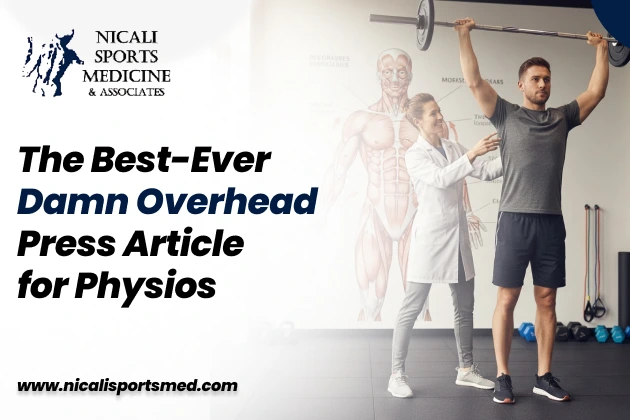
Have you noticed a client struggling with an overhead press and felt unsure which adjustment could help them perform it safely? For physical therapists, knowing how the shoulder moves, recognizing common injury risks, and applying practical techniques during the overhead press are essential for helping clients improve safely.
Although the overhead press looks like a straightforward shoulder lift, it involves multiple muscles and joint coordination, and guiding clients to perform it correctly can significantly reduce injury risk and boost strength.
Why the Overhead Press Matters in Physical Therapy
The overhead press isn’t simply a gym lift; it’s a movement that challenges multiple muscles and joints at once. This exercise works the deltoids, trapezius, rotator cuff, and core muscles, all of which must coordinate to lift safely.
Physiotherapists can use the overhead press to spot weaknesses in upper body strength, check joint stability, and observe how muscles communicate during movement. Shoulder injuries rank among the most common musculoskeletal problems in adults.
The American Physical Therapy Association (APTA) reports that rotator cuff tears impact almost 2 million Americans each year. By carefully assessing a client’s overhead press, physiotherapists can pinpoint movement weaknesses or mobility limits that may lead to shoulder problems.
Common Mistakes Physios Should Watch
Even experienced therapists sometimes overlook subtle movement errors during the overhead press.
Here are key mistakes to look for:
-
Scapular Dyskinesis
Improper shoulder blade movement can reduce shoulder stability, leading to impingement.
-
Lumbar Hyperextension
Many clients arch their lower back to compensate for weak shoulder stabilizers, which increases the risk of disc injuries.
-
Limited Shoulder Mobility
Tight thoracic spine or anterior shoulder muscles can restrict overhead range, making press movements unsafe.
-
Grip and Wrist Misalignment
Even small deviations in hand placement can change muscle recruitment and joint stress.
Identifying these issues early allows physical therapists to intervene with corrective exercises, mobility drills, and proper cueing, preventing injury before it occurs.
Step-by-Step Technique: Teaching the Perfect Overhead Press
Successfully performing the overhead press isn’t about heavy lifts alone; it requires precise movement and protecting the shoulder and spine. Physical therapists can follow this step-by-step approach to coach clients through a safe and effective overhead press:
- Stand with feet shoulder-width apart, draw in the core for stability, and gently retract the shoulder blades.
- Place your hands slightly wider than shoulder width, keeping the wrists straight and relaxed.
- Press the weight upward using your shoulders and triceps, keeping your core firm. Be careful not to arch the lower back excessively.
- Guide the shoulder blades to rotate upward naturally as you press, allowing fluid and controlled motion.
- Bring the weight down gradually, keeping control at all times to protect the shoulder joint.
Following this method not only keeps clients safe but also improves body awareness and movement coordination, key elements for those recovering from shoulder injuries.
How to Safely Integrate the Overhead Press into Rehab Programs for Shoulder Recovery?
Recent research in the Journal of Orthopaedic & Sports Physical Therapy shows that using different overhead press variations can help patients recover from rotator cuff injuries, improve posture, and prevent shoulder impingement.
Therapists can use dumbbells, resistance bands, or cable machines to match the weight and movement range to each patient’s abilities. Eccentric-focused presses, which emphasize the lowering phase, strengthen tendons and help prevent chronic tendinopathy.
The same research highlights that controlled eccentric loading boosts tendon healing, making it an effective choice for patients focused on recovery.
Safety Considerations Every Physio Must Know
Ensuring safety is critical whenever clients perform overhead presses. Physiotherapists should check for conditions that could make the exercise unsafe, including:
- Shoulder instability or previous dislocations that compromise joint safety
- Recent or severe rotator cuff injuries
- Advanced osteoporosis or vertebral fractures that make lifting risky
- Heart or cardiovascular conditions that limit safe exertion
Careful screening combined with a personalized exercise plan ensures each client progresses safely. Following professional guidelines, physiotherapists focus on patient-centered care, making sure exercises do not worsen existing injuries or conditions.
Finding the Best Physical Therapy in Pasadena
If you want to improve your overhead press safely and prevent injuries, partnering with experienced therapists can make a real difference. Clinics that focus on strength rehab, mobility testing, and functional training can tailor exercises to each individual’s needs. In Southern California, choosing the best physical therapy in Pasadena gives you hands-on guidance for proper movement and boosting performance.
Final Takeaways
The overhead press isn’t just another gym exercise; it challenges the shoulders, core, and neuromuscular system all at once.
Physiotherapists who recognize proper technique, avoid common mistakes, and adapt exercises for rehab can help clients move more safely and build lasting strength. By assessing each client, customizing programs, and prioritizing safety, the overhead press can play a central role in both recovery and strength training.
When physiotherapists emphasize proper biomechanics, provide hands-on guidance, and tailor care to each client, they help patients rebuild strength while moving safely long-term.